Cement Types Explained: CEM I, II, III, IV and V
How the five main cement types under TS EN 197-1 differ, what 32.5 / 42.5 / 52.5 and the letters N and R on the bag mean, and which cement suits which job.
- Published
- Author
- Genç Avşar Hafriyat
- 7 min read
- 7 min read
What is cement, and what does TS EN 197-1 cover?
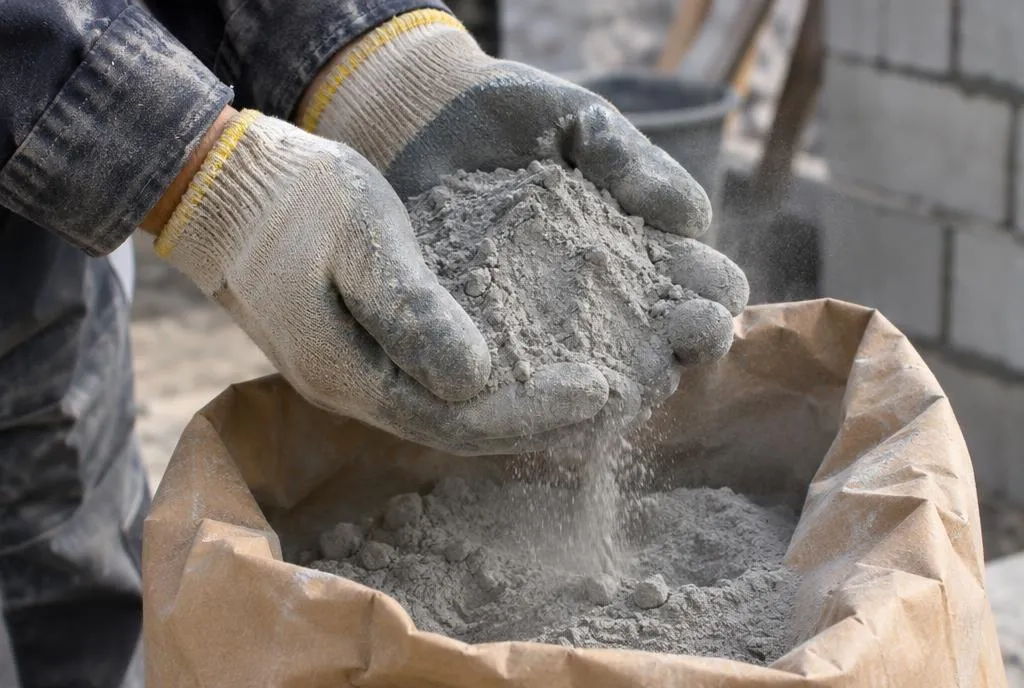
Cement is a binder made by burning a mix of limestone and clay at around 1450 °C to produce clinker, which is then ground finely with a small amount of gypsum. Mixed with water it hardens through a chemical reaction and binds sand and gravel together into concrete.
In Turkey, common cements are classified under TS EN 197-1, the Turkish adoption of the European standard EN 197-1. The standard sorts 27 cement products into five main types and sets how much clinker each may contain and which additions are allowed.
These additions are called mineral additions. The most common are blast-furnace slag from steelmaking, fly ash from coal-fired power stations, natural pozzolanas of volcanic origin, and ground limestone. They replace part of the clinker, which changes how fast the cement gains strength, how much heat it gives off and how durable it is.
What is the difference between CEM I, CEM II, CEM III, CEM IV and CEM V?
The main difference between the five types is the share of clinker and the kind of material that replaces it. The table shows the main ranges as percentages by mass; every type may also contain 0-5% of minor additional constituents.
| Type | Name | Clinker (%) | Main addition |
|---|---|---|---|
| CEM I | Portland cement | 95-100 | None |
| CEM II/A | Portland-composite cement | 80-94 | 6-20% slag, fly ash, pozzolana, limestone etc. |
| CEM II/B | Portland-composite cement | 65-79 | 21-35% of the same additions |
| CEM III/A | Blast-furnace cement | 35-64 | 36-65% slag |
| CEM III/B | Blast-furnace cement | 20-34 | 66-80% slag |
| CEM III/C | Blast-furnace cement | 5-19 | 81-95% slag |
| CEM IV/A | Pozzolanic cement | 65-89 | 11-35% pozzolana |
| CEM IV/B | Pozzolanic cement | 45-64 | 36-55% pozzolana |
| CEM V/A | Composite cement | 40-64 | Slag and pozzolana together |
| CEM V/B | Composite cement | 20-38 | Slag and pozzolana together |
CEM II is the largest group, and most cement sold on the market belongs to it. The letter after the hyphen tells you the addition: S slag, D silica fume, P natural pozzolana, Q calcined pozzolana, V siliceous fly ash, W calcareous fly ash, T burnt shale, L and LL limestone, and M a mix of several additions. In silica fume cement (CEM II/A-D) the addition is limited to 6-10%.
What do the letters A, B and C mean?
The letter A, B or C after the type shows the clinker range. A has the highest clinker content; in B and C the share of additions grows. So CEM II/A contains more clinker than CEM II/B.
A separate standard, TS EN 197-5, also defines CEM II/C-M and CEM VI, which use even less clinker. These newer types were developed to cut carbon emissions and are not yet widely available.
What do 32.5, 42.5, 52.5 and the letters N and R mean?
The number is the minimum compressive strength, in megapascals (MPa), that the cement must reach at 28 days in the standard mortar test. MPa is a measure of force per unit area; the higher the number, the higher the strength class. The letter describes how quickly strength develops in the first days: N stands for normal early strength, R for high (rapid) early strength.
| Class | Minimum early strength (MPa) | 28-day strength (MPa) |
|---|---|---|
| 32.5 N | 16.0 at 7 days | 32.5 to 52.5 |
| 32.5 R | 10.0 at 2 days | 32.5 to 52.5 |
| 42.5 N | 10.0 at 2 days | 42.5 to 62.5 |
| 42.5 R | 20.0 at 2 days | 42.5 to 62.5 |
| 52.5 N | 20.0 at 2 days | at least 52.5 |
| 52.5 R | 30.0 at 2 days | at least 52.5 |
One distinction matters here: these figures describe the cement tested as standard mortar in a laboratory, not the concrete. Concrete strength (classes such as C25/30 or C30/37) depends on the cement content, the water-cement ratio, the aggregate and the care after pouring, known as curing. Using 42.5 R cement does not on its own guarantee sound concrete.
How do you read the code on the bag?
Take CEM II/A-M (P-LL) 42.5 R as an example. It is a Portland-composite cement (CEM II) of the high-clinker subtype (A), with pozzolana and limestone used together (M, with P and LL in brackets), a 28-day strength class of 42.5 and rapid early strength (R). CEM II/A-S 42.5 R would be a cement of the same class with slag as the addition.
Which cement is used for which job?
The short answer: whatever the project specifies. The concrete class and, where needed, the cement type are set out in the structural drawings and specifications; with ready-mixed concrete, the batching plant chooses the cement to meet those requirements. Still, knowing where each type is typically used helps you follow what is said on site.
- Early striking of formwork, precast elements, cold-weather pours: CEM I or R-class cements with high early strength are preferred.
- Thick foundations, retaining walls, hot-weather pours: Slag or pozzolanic cements release heat more slowly and in smaller amounts, which helps reduce the risk of cracking.
- Sulfate-bearing soil, groundwater or seawater exposure: Sulfate-resisting cements (types marked SR) or blended cements approved by the engineer are used. This decision follows the results of the geotechnical survey.
- General reinforced concrete work, plaster and masonry mortar: The CEM II cements on the market suit most jobs.
Cement gives off heat as it reacts with water; this is called the heat of hydration. If the core of a thick concrete element stays much hotter than its surface, the difference can cause cracks. This is where slag and pozzolana help. The trade-off is slower strength gain, so keeping concrete made with these cements moist in the first days is even more important.
In Izmir and along the Aegean coast, especially on plots close to the sea or with a high water table, the properties of the foundation concrete are set according to the geotechnical survey. During foundation excavation the soil and water conditions become clearly visible; anything unexpected should be reported to the engineer before the concrete is poured.
What should you check when buying and using cement?
Bagged cement is used for small jobs such as plaster, screed or garden wall mortar. The bag should state the standard it complies with (TS EN 197-1) and the full type code described above; reading the code tells you exactly what you are buying.
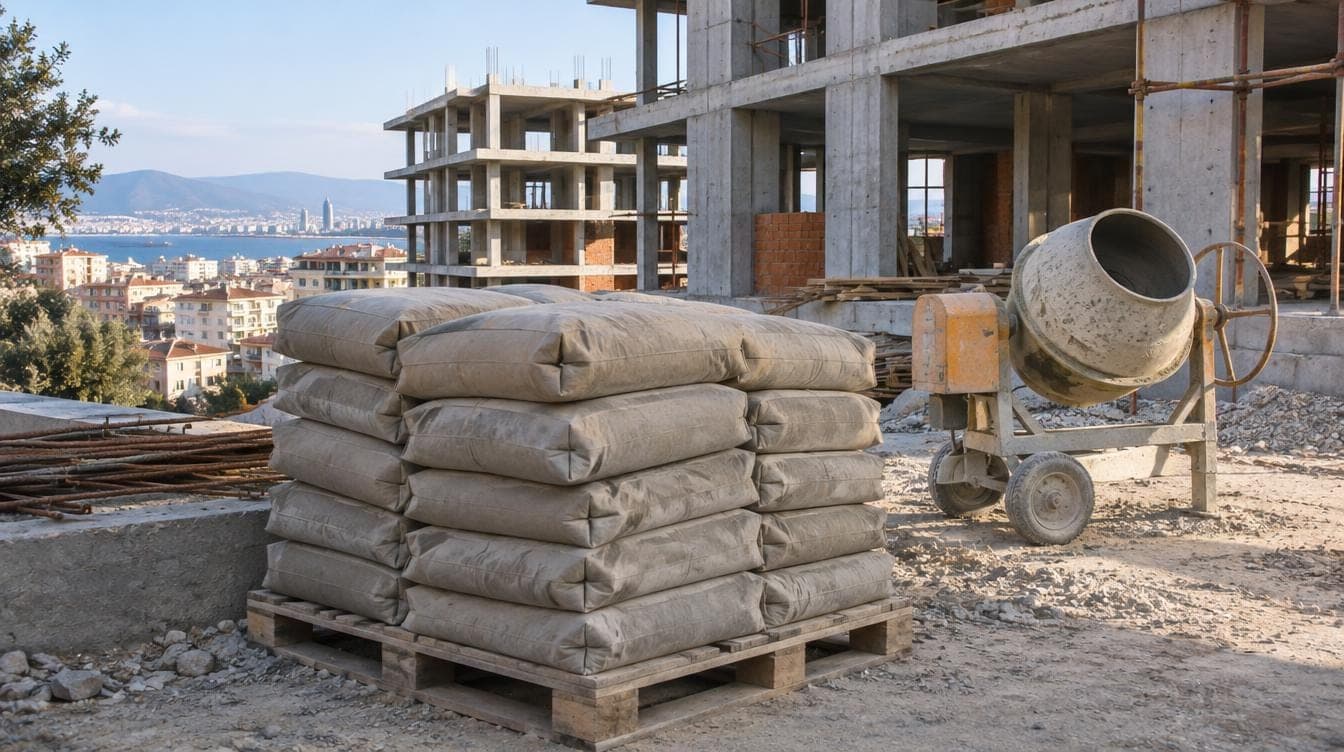
- Store cement in a dry, covered place on pallets so it does not touch the ground. Cement that absorbs moisture forms lumps.
- Do not use cement with lumps too hard to crush by hand for structural work.
- Where possible, use the same cement type and class for one element so that strength development and colour stay consistent.
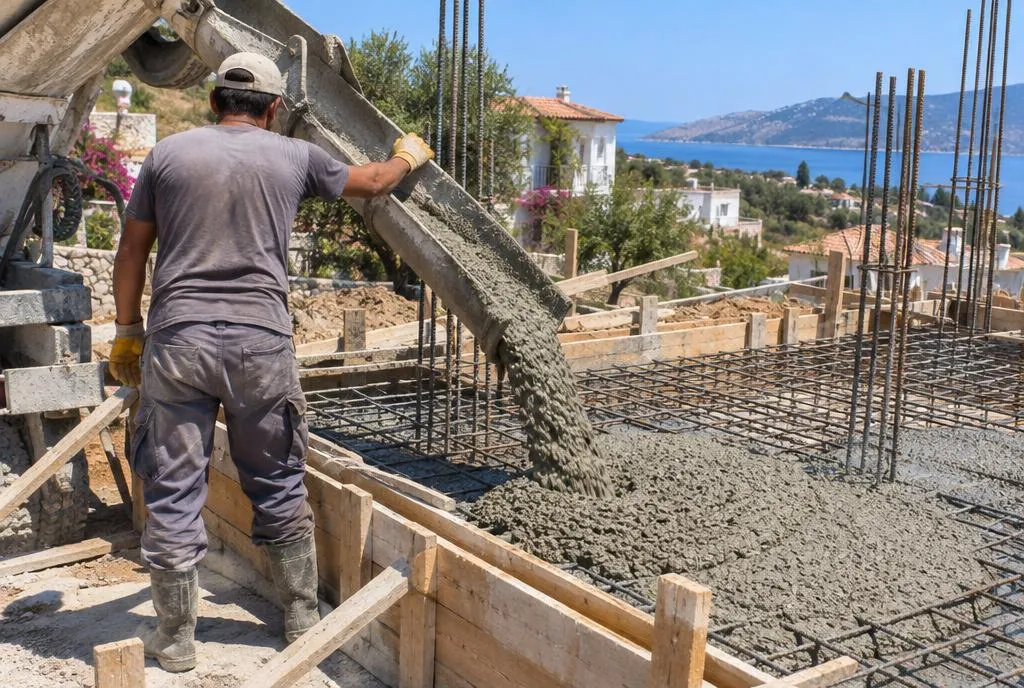
- Load-bearing elements such as foundations, columns, beams and slabs are built with ready-mixed concrete of the class specified in the project; mixing concrete from bagged cement on site is not appropriate for them.
Sources
Frequently asked questions
What is the difference between CEM I and CEM II?
CEM I is Portland cement with 95-100% clinker. In CEM II, 6-35% of the clinker is replaced by additions such as slag, fly ash, pozzolana or limestone.
What does 42.5 R mean?
42.5 means the cement must reach a compressive strength of at least 42.5 MPa at 28 days. R means rapid early strength, at least 20 MPa at 2 days.
What is the difference between N and R?
N stands for normal early strength and R for high early strength. The 28-day class is the same; the difference lies in how fast strength develops in the first days.
Why is slag cement preferred for thick concrete?
Slag cements release heat more slowly and in smaller amounts as they harden. This helps reduce cracking caused by the temperature difference between the core and the surface of thick elements.
Is the cement class the same as the concrete class?
No. The cement class is measured in a standard mortar test, while concrete strength depends on cement content, water-cement ratio, aggregate and curing, and is specified separately in the project.
This article is for general information only. Decisions about your own project should be made with the licensed project designer and a qualified civil engineer.
- cement
- TS EN 197-1
- CEM II
- concrete
- building materials